
Online doctor, Thailand
Food Poisoning in Thailand When it was something you ate.
Sick within hours of a meal, maybe alongside someone who ate the same thing? NHS guidance says food poisoning usually starts within a few hours or days of eating something and usually settles within a week. NaTHNaC says to seek medical care if it has not improved within three days, and immediately for a fever of 38°C or more, blood or mucus in the stools, severe abdominal pain, jaundice or rash. Pomodoc connects you by video with an English-speaking doctor licensed to treat you in Thailand, for a fixed €40, to tell you whether this needs a hospital. In an emergency call 1669 for an ambulance.
If you can name the meal, that is information rather than a guess. When it started, what you ate and who else is ill are the first three things worth having ready.
- €40
- per consultation
- No insurance
- or hospital account needed
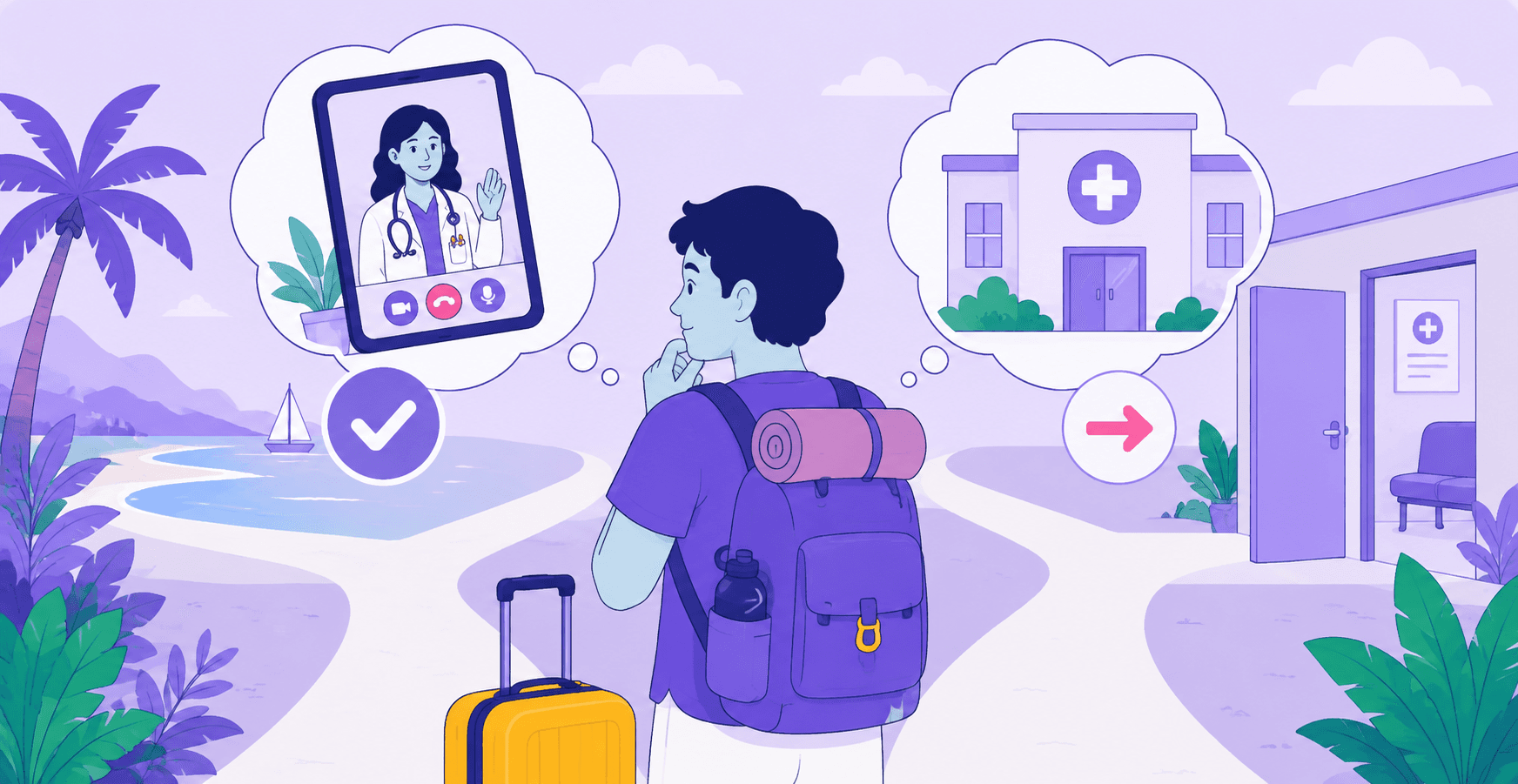
English-speaking doctors, licensed to treat you in Thailand.
When You Can Name the Meal
NHS guidance describes food poisoning as feeling sick or being sick, diarrhoea, tummy pain, a high temperature and feeling generally unwell, usually starting within a few hours or a few days of eating the food that caused it, and usually getting better within a week.
The Thai version of that question is almost always about the same three suspects: something that was not piping hot when it reached you, something raw that was washed in water you would not drink, or ice and drinks. TravelHealthPro says all travellers here should take care with personal, food and water hygiene, and NaTHNaC's own rule is about the food rather than the venue — freshly cooked and served hot is the low-risk category, wherever it was cooked.
With Pomodoc you can speak directly with an English-speaking doctor by video from wherever you are staying. Talk through what you ate, when it started, how much you are keeping down, and whether this needs in-person care in a country where FCDO says every hospital wants a guarantee of payment first.
- Consult securely by video
- Avoid unnecessary travel and waiting rooms
- Get clear guidance about your symptoms and treatment
- Access care while travelling or living in Thailand
Tell the Hotel, Go to Hospital, or Wait?
Two decisions arrive together when a meal has made you ill: what to do about your symptoms, and what to say to whoever served it. They are not the same decision, and the first one comes first.
What is available around you
- private international hospitals, which FCDO says are of a high standard but can be expensive
- public hospitals, which FCDO says do not always meet UK standards, particularly outside Bangkok
- pharmacies, where you can ask about oral rehydration salts, which is the main thing this illness needs
- 191, asking for an ambulance, which is what FCDO advises, or 1669, the local ambulance number
For anything needing fluids into a vein or an examination, a hospital is where you are going — and FCDO's guarantee-of-payment rule is why it is worth knowing before you set off rather than at the desk. Telling the property is worth doing early and separately: not as a complaint, but because a kitchen that knows two guests are ill can act on it today, and because a note of what you ate and when it started is genuinely useful to a doctor afterwards. What you do about anything beyond that is not a medical question and this page does not advise on it.
A video consultation first can
- tell you whether what you describe needs a hospital at all, before you commit to one
- say whether this fits something you ate or something else entirely
- judge how dehydrated you sound, and give you thresholds for overnight
- happen from the bathroom floor, which is where this illness actually keeps you
Pomodoc connects you with an English-speaking doctor by video, licensed to treat you in Thailand, for €40 per consultation. Fixed price, no surprises.
If you need a hospital, you will be told to go, and told why. On an island, being told early matters more, because the next boat is part of the treatment plan.
Your consultation runs on Air Doctor's ISO‑certified platform (ISO/IEC 27001 & ISO 27799 for health data). See our security & certifications.
How It Works
Medical advice by video in three simple steps
Start online
Tell us where you are in Thailand and what is going on. It is a short form, not an appointment request.
Join by video
See your English-speaking doctor using your phone, tablet or computer.
Get clear guidance
Discuss your symptoms and receive advice about your next steps.
Why Use Pomodoc?
Know whether this needs a hospital
Most cases settle on fluids and rest, and some do not. Which one you have is a clinical judgement, and it is the judgement this illness actually turns on.
You do not have to leave the room
This is the illness where getting anywhere is the hardest part. A consultation happens where you already are.
The meal is evidence, and a doctor can use it
What you ate, when it started, whether anyone else is ill. A history is most of what this diagnosis is made of, and it travels perfectly over video.
Understand what to do next
A doctor can help you decide whether you need treatment, rehydration support, a test, or an in-person appointment.
Travellers who needed a doctor abroad
I was very happy to find this service
I was very happy to find this service! I was able to get a video visit with a physician promptly and get care.
Easy, competent, nice
Doctor was very nice and adequately thorough, explained everything very well. The whole process was far easier than expected.
Reliable and efficient
Reliable and efficient, able to provide medical support while you're away from home.
Reviews of Air Doctor, our medical partner, published on Trustpilot.
More About Food Poisoning in Thailand
Street food is not the answer to the question
It is the first thing travellers blame and it is usually the wrong unit of blame. NaTHNaC's rule is about the food rather than the venue: it advises avoiding food from street vendors unless it is freshly cooked and served hot on clean dishware, and it puts recently prepared, thoroughly cooked, piping-hot meals in the lowest-risk category wherever they were made.
By that rule a wok going constantly at a night market can be a safer bet than a tray that has been sitting under a lamp at a resort buffet. The things NaTHNaC actually names to avoid are salads and uncooked vegetables, unpasteurised dairy, and undercooked meat and seafood — which on a Thai trip usually means the salad, the shellfish and whatever was already plated when you arrived.
Ice, water and what NaTHNaC says is safe to drink
NaTHNaC lists unopened factory-produced canned or bottled drinks with intact seals as generally safe, along with hot drinks such as tea and coffee. Where the water is a question, the ice is the same question in a colder form, because it is made of it.
If you need to treat water yourself, NaTHNaC's methods are boiling to a rolling boil, a commercial chemical disinfectant such as chlorine or chlorine dioxide, or a filter with a pore size between 0.2 and 1.0 micrometres. Most travellers will not need any of that; on a trek or a remote island it is worth knowing.
Was it the meal, or was it a mosquito?
This is the fork that is particular to Thailand and it is worth sitting with. TravelHealthPro says there is a risk of dengue here, and dengue is confirmed on a blood test rather than by eye. A high fever that arrives with a headache and aching rather than with the meal is not the pattern food poisoning usually makes.
Nobody can settle that from a screen and this page will not pretend otherwise. What a consultation can do is take the history properly — when it started relative to eating, what the fever is doing, whether anyone who shared the meal is ill — and tell you whether you should be tested in person, and how soon. Being sent for a blood test with a reason is a good outcome of a video call, not a failure of one.
Telling the property, and why it is worth doing early
If several people who ate the same thing are ill, the hotel, resort or restaurant is the only party who can do anything about it today, and they can only do it if they know. Say it plainly and early: what you ate, where, and when you started feeling ill.
Write the same three things down for yourself while you still remember them. It helps a doctor build the timeline, and a timeline is most of what this diagnosis is. Anything beyond that — insurance, a complaint, a claim — is not a medical question, and this page has no view on it.
Rehydration is the treatment, and the signs to watch
NHS guidance is lots of fluids, in small sips if you feel sick, and no fruit juice or fizzy drinks because they can make diarrhoea worse. Eat when you feel able to, and it may help to avoid fatty or spicy food. Oral rehydration salts from a pharmacy replace what a heavy episode takes out of you; mix them with water you would otherwise drink.
Keep an eye on the dehydration signs. Dark urine, passing very little, dizziness on standing: those are the ones to act on rather than sit out.
The three-day line, and what it is for
NaTHNaC's threshold is unusually clean: seek medical care if symptoms do not improve within three days. NHS puts its own outer limits at more than seven days of diarrhoea or more than two days of vomiting.
Those numbers are not a countdown you have to serve. They are a line that stops a traveller talking herself into a fourth day on bottled water when something else is going on — and they are exactly the kind of judgement a short conversation can make properly, before the itinerary makes it for you.
Good things to know.
How do I know if it was food poisoning in Thailand or a stomach bug?
Timing and company are the two best clues. NHS says food poisoning usually starts within a few hours or a few days of eating the food that caused it, so a meal you can point at, especially one that made someone else ill too, is real evidence. Diarrhoea that arrived without any suspect meal is more likely the general travellers' variety — our travellers' diarrhoea guide for Thailand is written for that. A doctor can take the history and tell you which one you are describing.
What are the symptoms of food poisoning in Thailand?
The same as anywhere: NHS describes feeling sick or being sick, diarrhoea, tummy pain, a high temperature and feeling generally unwell, usually starting within a few hours or a few days of eating the food that caused it and usually settling within a week. What Thailand adds is not a different symptom set. NaTHNaC says to seek medical care immediately for a fever of 38°C or more, blood or mucus in the stools, severe abdominal pain, jaundice, rash or altered mental status, and to seek care if things have not improved within three days.
How long does food poisoning in Thailand last?
NHS says it usually gets better within a week, and NaTHNaC's line is that you should seek medical care if symptoms have not improved within three days. If your question has become about duration rather than about the meal — day four, still going, no obvious culprit — our travellers' diarrhoea guide for Thailand is the page written for that, and it carries the rehydration detail this one does not.
Is street food in Thailand safe?
NaTHNaC's advice is about the food rather than the stall: avoid food from street vendors unless it is freshly cooked and served hot on clean dishware, and treat recently prepared, thoroughly cooked, piping-hot meals as the lowest-risk option anywhere. A wok that never stops meets that. A buffet tray that has been standing under a lamp does not, whatever it cost. What NaTHNaC names to avoid is salads and uncooked vegetables, unpasteurised dairy, and undercooked meat and seafood.
Is the ice in Thailand safe?
Ice is only as safe as the water it is made from, so where the water is a question the ice is the same question. NaTHNaC lists unopened factory-produced canned or bottled drinks with intact seals as generally safe, and hot drinks such as tea and coffee. If you are treating water yourself, its methods are boiling to a rolling boil, a commercial chemical disinfectant, or a filter with a pore size between 0.2 and 1.0 micrometres.
I have a fever after eating in Thailand. Could it be dengue?
It is a reasonable question here and it is not one a video call can settle. TravelHealthPro says there is a risk of dengue in Thailand, and dengue is confirmed on a blood test rather than by eye. A high fever with headache and aching that did not follow a meal is not the usual food-poisoning pattern. Dengue is not the only possibility: TravelHealthPro gives a low risk of malaria in the rural, forested borders with Cambodia, Laos and Myanmar, a very low risk in the rest of the country, and no risk in Bangkok, Chiang Mai, Chiang Rai, Koh Phangan, Koh Samui and Pattaya; it says a fever of 38°C or more starting more than a week after being in a malaria risk area needs immediate medical care. A consultation can take the history and tell you whether to be tested in person and how urgently. Separately, NaTHNaC says a fever of 38°C or more with a stomach upset is a reason to seek medical care immediately.
Should I go to a hospital in Thailand for food poisoning?
For NaTHNaC's immediate-care signs — a fever of 38°C or more, blood or mucus in the stools, severe abdominal pain, jaundice, rash or confusion — yes, and without waiting. For an ordinary case, the honest answer is that most settle on fluids and rest, and that FCDO says all hospitals in Thailand require a guarantee of payment before treating patients, which makes 'go and find out' an expensive way to ask the question. A consultation first is a cheaper way to get the same answer.
Should I tell the hotel or restaurant?
Yes, and early. If several guests who ate the same thing are ill, the property is the only party who can act on it today, and they can only act if they know. Write down what you ate, where, and when symptoms started — it helps them, and the timeline is genuinely useful to a doctor. Anything beyond telling them is not a medical question and this page does not advise on it.
How much does a Pomodoc video consultation cost?
€40 is the fixed price of the video consultation with a doctor. It includes the consultation and, where clinically appropriate and local rules permit, a prescription. Medication you buy at a pharmacy, and any in-person care you go on to need, are separate. There is no subscription and no booking fee.
When is a video consultation not the right call?
Not when NaTHNaC's immediate-care signs are present — a fever of 38°C or more, blood or mucus in the stools, severe abdominal pain, jaundice, rash or altered mental status — and not for the NHS emergency signs: vomiting blood or vomit like ground coffee, a severe headache or stiff neck with light sensitivity, severe tummy pain, difficulty breathing or confusion. In Thailand, call 1669 for an ambulance. It is also not the right tool when a doctor needs to examine you or run a blood test; if that is what your symptoms need, the useful outcome of the call is being told so early.
Sources
- Food poisoningNHSThe symptom set — feeling sick or being sick, diarrhoea, tummy pain, a high temperature and feeling generally unwell; that symptoms usually start within a few hours or a few days of eating the food that caused the infection; that it usually gets better within a week; the self-care advice on rest, lots of fluids in small sips, eating when able and avoiding fatty or spicy food; the advice to get medical advice for signs of dehydration, being unable to keep fluids down, bloody stools, diarrhoea for more than seven days or vomiting for more than two; and the emergency signs including vomiting blood or vomit like ground coffee, green or yellow-green vomit, a stiff neck with light sensitivity, a severe headache, severe tummy pain, difficulty breathing and confusion.
- Food and water hygieneTravelHealthPro (NaTHNaC)That travellers with diarrhoea should seek medical care if symptoms do not improve within three days, and immediately for a fever of 38°C or more, blood and/or mucus in the stools, altered mental status, severe abdominal pain, jaundice or rash; that unopened factory-produced canned or bottled drinks with intact seals and hot drinks such as tea and coffee are generally safe; that recently prepared, thoroughly cooked, piping-hot food and fruit the traveller peels are the lowest-risk options; the advice to avoid salads and uncooked vegetables, unpasteurised dairy, undercooked meat and seafood, and street vendor food unless freshly cooked and served hot on clean dishware; and the water treatment methods — boiling to a rolling boil, chemical disinfection with chlorine or chlorine dioxide, and filters with a pore size of 0.2 to 1.0 micrometres.
- Thailand: country informationTravelHealthPro (NaTHNaC)That all travellers to Thailand should take care with personal, food and water hygiene; that there is a risk of dengue in Thailand; that there is a low risk of malaria in the rural, forested borders with Cambodia, Laos and Myanmar, a very low risk in the remaining areas, and no risk in the cities of Bangkok, Chiang Mai, Chiang Rai, Koh Phangan, Koh Samui and Pattaya; and that travellers who develop a fever of 38°C or more more than one week after being in a malaria risk area should seek immediate medical care (re-checked 2026-10-01).
- Thailand travel advice: HealthForeign, Commonwealth and Development OfficeThat private hospitals are of a high standard but can be expensive; that public hospitals do not always meet UK standards, particularly outside Bangkok; that all hospitals require a guarantee of payment before treating patients; and FCDO's emergency medical advice to dial 191 and ask for an ambulance, with 1669 as the local ambulance number (re-checked 2026-10-01).
Sources last checked: . General information, not a diagnosis.
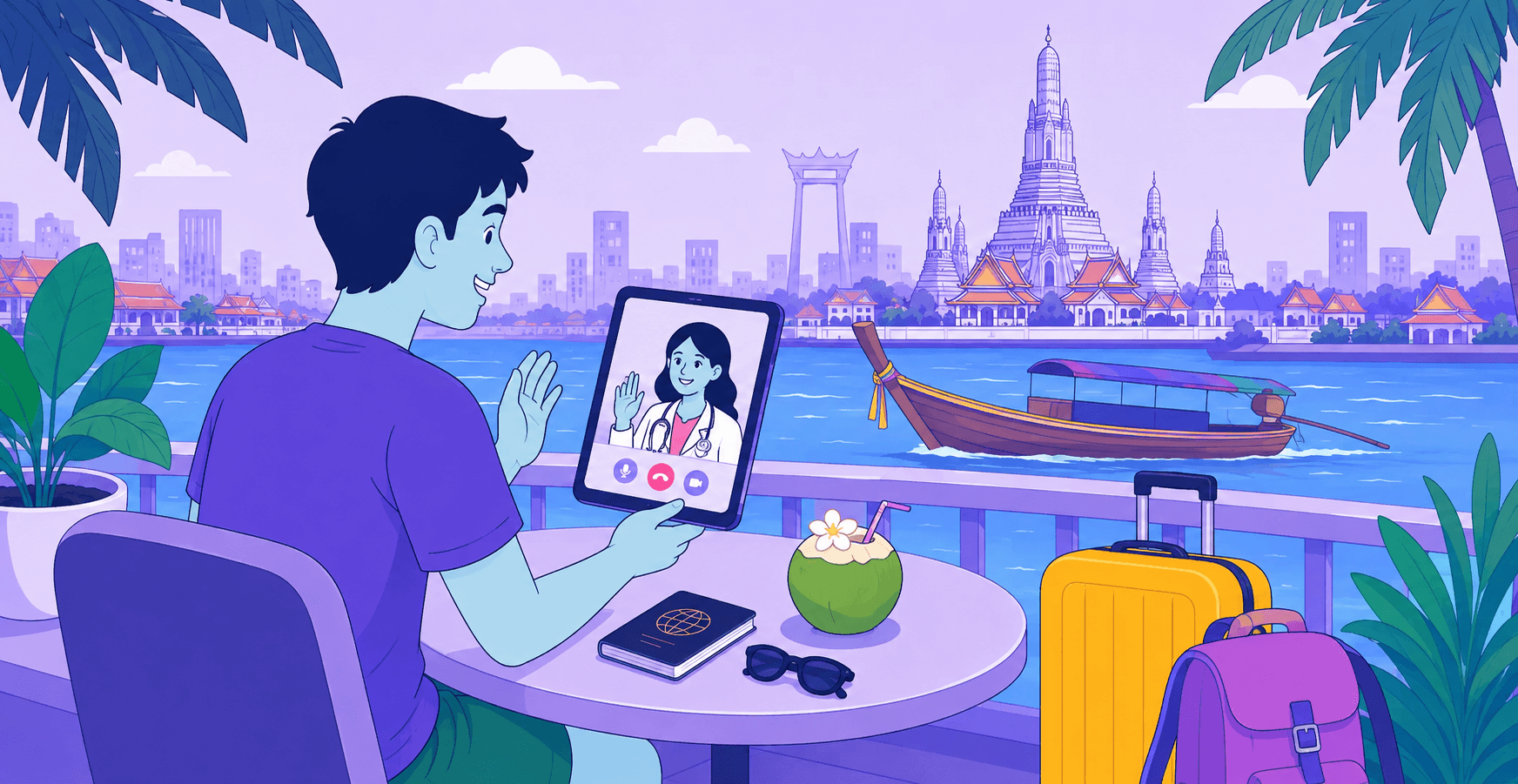
Ill After Eating in Thailand?
Speak to an English-speaking doctor by video and get guidance from wherever you are.
- €40, fixed price
- Licensed in Thailand
- English-speaking doctors
- Prescriptions where available
Video consultations are for suitable non-emergency medical concerns. In a life-threatening emergency in Thailand, call 1669 and ask for an ambulance. This page is general information, not medical advice about your own situation.