
Medication
Prescriptions abroad: what travellers need to know
What carries across borders, what does not, and what to do when your medication is 3,000 miles from your bathroom cabinet.
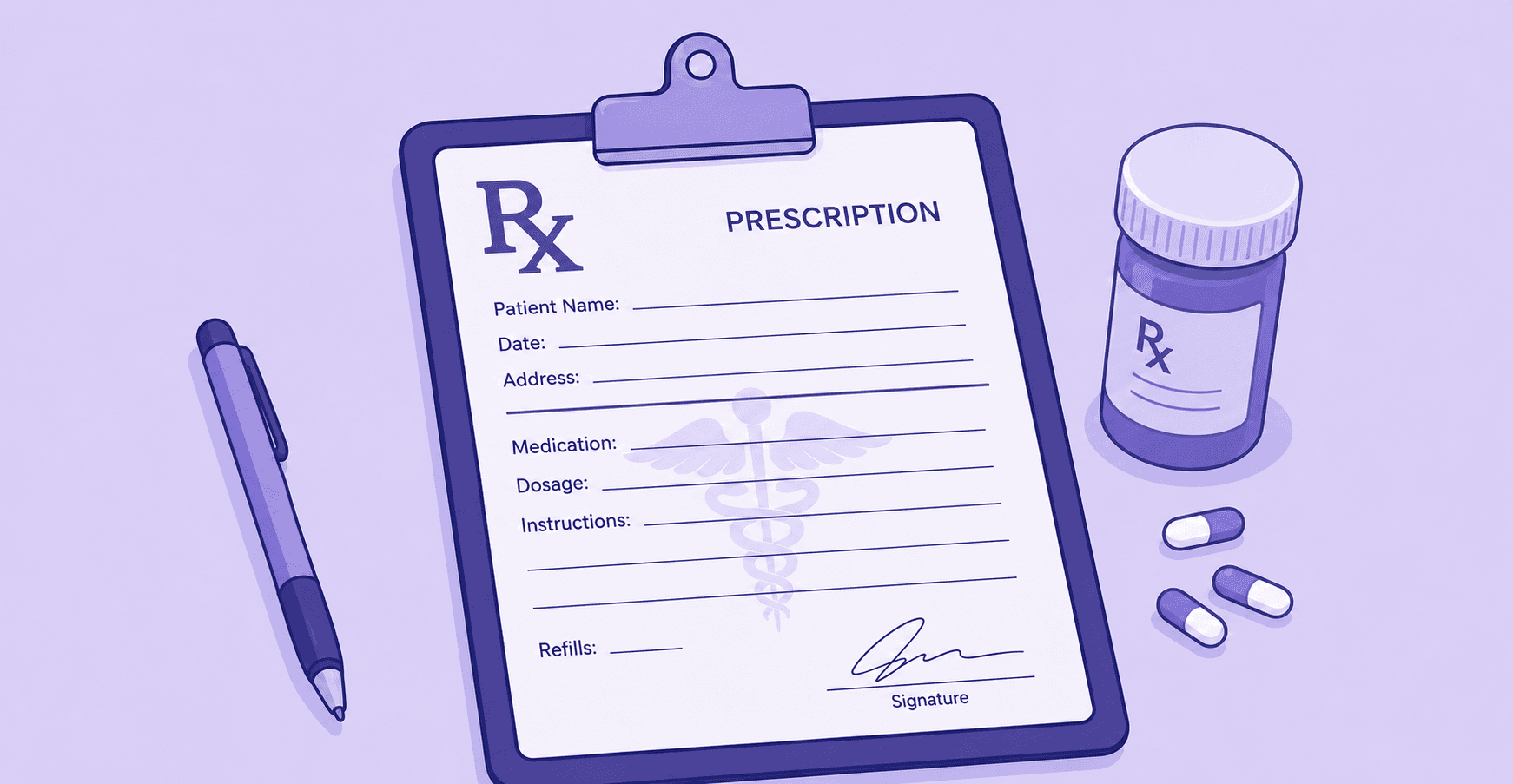
The short answer
Inside the EU, a prescription from a doctor in one EU country is valid in all the others, although the pharmacist applies local dispensing rules and the medicine may be unavailable or sold under another name. Outside the EU there is no such general rule: prescribing is regulated nationally, and whether a pharmacy will accept a foreign prescription depends on the country. What travels well is information: the generic name of your medicine, its strength and dose, a copy of the prescription, and a letter from your prescriber. What travels badly is the assumption that a medicine legal at home is legal or available where you are going. Check the rules for your destination with its embassy or high commission before you travel, and check whether your medicine contains a controlled drug.
Worth knowing
- Inside the EU, a prescription from one EU country is valid in the others, but dispensing follows local rules. Elsewhere, treat your prescription as documentation rather than an entitlement to be dispensed.
- UK government guidance for leaving the UK with a controlled drug: check the destination's rules with its embassy, and be able to prove the medicine is yours with a prescription or a letter from your doctor. The three-month limit in that guidance applies to people bringing medicine into the UK.
- NaTHNaC guidance: carry medicines in hand luggage, correctly labelled and in their original pharmacy packaging, and consider packing spares in hold luggage in case hand luggage is lost.
- Ask your prescriber to write the letter using generic names. Brand names differ between countries; the generic name is what a pharmacist anywhere can identify.
- A medicine that is legal in the UK can be banned elsewhere. NaTHNaC gives medicinal cannabis and CBD products as examples, noting some countries take a zero-tolerance approach.
In this guide
Can you use your prescription in another country?
It depends on where it was written and where you are. Within the EU, a prescription delivered by a doctor in one EU country is valid in all other EU countries. The pharmacist still applies the dispensing rules of the country you are in, and the medicine may not be authorised or available there, or may be sold under a different name, which is why the prescription should give the medicine's common name rather than its brand. Outside the EU there is no equivalent general rule, so whether a pharmacy will accept a prescription from another country depends on that country and is worth checking before you travel.
What your prescription is genuinely useful for is proving what you take and why. That matters at a border, at a pharmacy counter, and in a consultation with a local doctor who has no access to your records.
What should you do before you travel?
- Check whether your medicine contains a controlled drugUK government guidance is that your doctor or pharmacist can tell you, and that you can also check the drugs listed on the packaging against the controlled drugs list. This is the single check most worth doing, because it is the one with legal consequences.
- Check the destination country's rulesUK government guidance is to check the rules for the country you are going to with the embassy before you travel. NaTHNaC adds that these rules can be difficult to obtain for some countries, so allow time rather than doing it the night before.
- Get a letter from your prescriber, using generic namesNaTHNaC advises obtaining a copy of all prescriptions to carry during travel, and a letter from the prescriber detailing the medicines with the generic names. It notes this helps at border control checks and if you need to replace medicines.
- Take enough, and keep it labelledIf your medicine contains a controlled drug, NaTHNaC notes that larger quantities, usually three months' supply or more, may need an export licence, and UK Home Office guidance notes that many controlled drugs are not normally prescribed in quantities greater than one month's supply. NaTHNaC advises that medication should be correctly labelled and in its original pharmacy packaging, carried in hand luggage, with extra packed in the hold in case hand luggage is lost or stolen.
- Photograph everythingPrescription, prescriber letter, and the label on each box. If the bag goes missing, the photos are what let a pharmacist or a doctor work out what you need.
Which medicines need extra paperwork?
Controlled drugs are the category to watch. NaTHNaC lists examples of medicines that may require an export licence before transporting set quantities, usually three months' supply or more, including diamorphine, diazepam, codeine, fentanyl, methadone, morphine, pethidine, Ritalin and temazepam. Licence applications must be submitted at least ten days before travel. For shorter trips, it advises a letter from the GP or prescriber detailing the medicines.
UK government guidance adds that you must carry medicine containing a controlled drug with you in your hand luggage when entering or leaving the UK.
The rules above are UK-specific. If you are travelling from elsewhere, the shape of the advice holds but the thresholds and the paperwork will not. Check your own national guidance and the destination's embassy.
What if you lose your medication mid-trip?
First, work out how urgent it actually is. Missing a few days of something you take for a long-term condition is a very different problem from missing a dose of something you take occasionally, and the answer depends on which medicine it is. That is worth asking a doctor rather than deciding yourself.
Then, in rough order of usefulness:
- Find the photo or copy of your prescription and prescriber letter. Everything below is easier with the generic name, strength and dose in front of you.
- Speak to a local pharmacist. Depending on the medicine and the country, some things are available without a prescription that would need one at home, and the reverse is also true.
- Speak to a doctor licensed where you are. They can assess whether a local prescription is appropriate, and what the local equivalent of your medicine is called.
- If it is a controlled drug, expect it to be harder, and expect to need documentation. This is the category where planning ahead pays and improvising does not.
Why is your medicine called something else here?
Because the brand name is a commercial name, and it changes between markets. The same active ingredient can be sold under several different brands in different countries, which is exactly how travellers end up staring at a shelf convinced their medicine does not exist.
The generic name is the one that does not change. This is why NaTHNaC advises asking your prescriber to write the letter using generic names: a pharmacist who has never heard of your brand can still identify the ingredient, the strength and the form.
Is it safe to buy medicine at a local pharmacy?
In most places, from an established pharmacy, yes. The caution is about supply chains rather than pharmacists. NaTHNaC advises that wherever possible travellers should avoid the risk of purchasing falsified medication by obtaining all the medication they need before travel, and cites a WHO estimate that one in ten medicines in low- and middle-income countries failed quality tests. It notes falsified medicines can contain ingredients that do not work or are toxic, resulting in treatment failure or serious harm.
In practice: bring what you need, buy from a proper pharmacy rather than a market stall or a website if you must buy locally, and be more careful the more the medicine matters.
What a pharmacist is allowed to do varies too. In France, since June 2024 a trained pharmacist can dispense antibiotics without a prescription after a positive rapid test at the counter, but only for two conditions: a sore throat in people aged 10 and over, and simple cystitis in women aged 16 to 65. The pharmacist first checks for exclusions, and Service-Public gives not speaking French well enough to give your medical details as an example. If you have urinary symptoms, our guide to France's pharmacist rules for urinary infections explains who the route is open to.
Can a doctor on a video call prescribe for you?
Sometimes, and the honest answer has conditions attached that are not marketing hedges. Whether a prescription can be issued, and then actually dispensed by a pharmacy near you, depends on the medicine, the country you are in, and whether it is clinically appropriate for your situation. A doctor licensed to treat you where you are can tell you which of those apply to you.
For Pomodoc specifically: Prescriptions when local rules allow. Your doctor may issue one when it’s clinically appropriate and local rules permit.
Controlled drugs are a separate question again, and generally the hardest category to resolve remotely anywhere. If you rely on one, the planning in this article is not optional.
If what you actually need is an assessment rather than a repeat, the five ways to see a doctor abroad compares your options. And if the reason you are reading this is a stomach bug, what to do in the first day of food poisoning is the more useful page.
Common questions
Can I take my prescription medicine on a plane?
Generally yes, and NaTHNaC advises carrying medicines in hand luggage, correctly labelled and in original pharmacy packaging, while checking airline restrictions particularly for liquids. UK government guidance is that medicine containing a controlled drug must be carried in hand luggage when entering or leaving the UK.
How much medication can I bring with me?
There is no single answer, because it is set by the country you are leaving and the country you are entering. UK government guidance limits people bringing medicine into the UK to three months' supply. For UK residents leaving with a controlled drug, it says to check the destination's rules with its embassy and carry proof the medicine is yours, and NaTHNaC notes that controlled drugs may require an export licence at around the three-month threshold, with applications submitted at least ten days before travel. If you are travelling from another country, check your own national rules.
Do I need a doctor's letter for ordinary medication?
It is not always required, but it is consistently useful. NaTHNaC advises carrying a copy of your prescriptions and a letter from the prescriber listing the medicines by generic name, both for border checks and in case you need to replace something.
What if my medicine is banned where I am going?
Find out before you travel, not at the airport. UK guidance is to check the rules with the destination country's embassy. If a medicine you rely on is restricted there, that is a conversation to have with your prescriber well ahead of the trip, because the alternatives take time to arrange.
Can I get a repeat prescription sent to me abroad?
Posting prescription medicines internationally runs into customs and medicines regulations, and is not something to rely on. Speaking to a doctor licensed where you are is usually the more realistic route, subject to the medicine and the local rules.
Is my prescription valid anywhere in the EU?
If it was written by a doctor in an EU country, yes: the EU's Your Europe guidance is that a prescription delivered in one EU country is valid in all other EU countries. The pharmacist applies the dispensing rules of the country you are in, and the medicine may not be available there or may have another name, so ask for a prescription that gives the medicine's common name. A prescription from outside the EU does not carry that recognition, so check the specific country's rules before you go.
Sources
- Dans quels cas un pharmacien peut-il délivrer un antibiotique sans ordonnance ?Service-Public.fr, Direction de l'information légale et administrativeThat a trained pharmacist in France may run a rapid test for sore throat (age 10 and over) or simple cystitis (women aged 16 to 65) and prescribe antibiotics if it is positive, after checking exclusion criteria, which include insufficient medical information, for example not speaking French.
- Take medicine in or out of the UKGOV.UKHow to check whether a medicine contains a controlled drug, the requirement to prove the medicine is yours with a prescription or doctor's letter, checking destination rules with the embassy when taking medicine out of the UK, carrying controlled drugs in hand luggage, and the three-month supply limit for people bringing medicine into the UK.
- Presenting a prescription in another EU countryYour Europe, European UnionThat a prescription delivered by a doctor in one EU country is valid in all other EU countries, that the medicine may not be available or may have another name, that the prescription should give the common name, and that dispensing is subject to the rules of the country where it is dispensed.
- Controlled drugs: personal licencesGOV.UK, Home OfficeThat anyone leaving the UK with medicine containing a controlled drug should be able to prove it is theirs with a prescription or clinician's letter and check the destination's rules with its embassy, and that many controlled drugs are not normally prescribed in quantities greater than one month's supply.
- Medicines and travelNaTHNaC, National Travel Health Network and CentreExport licences for controlled drugs and the ten-day application window, the named examples of controlled medicines, original pharmacy packaging and labelling, carrying copies of prescriptions and a prescriber letter using generic names, that legal status differs outside the UK with medicinal cannabis and CBD as examples, hand luggage and spare supplies, and the WHO estimate on falsified medicines.
- Apply for a free UK Global Health Insurance Card (GHIC)NHSThat a GHIC gives access to necessary state healthcare on the same basis as a local resident, which may involve a payment, and that it is not a replacement for travel insurance.
Keep reading
 Getting careHow to see a doctor online while you are abroadSeeing a doctor by video is one of five realistic options. What each one costs you in time, and how to pick without losing the afternoon.
 Getting careVideo or in person: which care do you actually need?What each one can and cannot do, the signs that rule video out entirely, and how to prepare for either.
 SymptomsFood poisoning on holiday: what to do firstThe first few hours, what actually helps, and the symptoms that mean it is time to involve a doctor.
 MedicationCan you get a prescription online without seeing a doctor?For a new problem the honest answer is no, and the reason is worth two minutes of your time when you are ill and in a hurry.