
Getting care
Telemedicine without insurance
Paying directly is often faster than a claim, and your insurance is not irrelevant afterwards. How self pay works when you are unwell abroad.
The short answer
You can pay directly for a video consultation abroad instead of going through your travel insurance, and for a minor problem that is often the faster route: no assistance hotline, no pre-authorisation, no approved clinic to find. Keep the receipt, because many policies let you claim an out of pocket medical cost back afterwards.
Worth knowing
- Paying directly is an option even when you do have travel insurance.
- For a minor problem it is usually quicker than a claim, which can mean phone queues and pre-authorisation before you speak to anyone medical.
- A good service shows the cost before you commit, so there is no surprise bill.
- Keep the receipt. Many policies reimburse out of pocket medical expenses.
- Self pay video consultations are for non-emergencies only.
In this guide
You are thousands of miles from home, you feel unwell, and you reach for your travel documents. You know you have insurance, but as you stare at the policy number a wave of exhaustion hits you. Calling an assistance line, explaining the situation, waiting for a callback, then finding an approved clinic: it all seems overwhelming.
So you wonder whether there is an easier way. Can you just pay to talk to a doctor yourself?
The short answer is yes. For many common travel health concerns, the simplest and fastest route to medical advice is to pay directly for a video consultation. This is not about being uninsured. It is about choosing speed and clarity at a moment when you feel vulnerable.
Why travellers choose to pay directly
Travel insurance is essential for emergencies and major medical events. But for a non-emergency video consultation, paying directly has some clear advantages on the road.
Speed and simplicity
When you have a sore throat or a worrying rash, you want advice now, not after an administrative detour. Paying directly is straightforward: you request a consultation, you pay a fixed fee, you talk to a doctor. It is something you can finish in minutes from your hotel room. The insurance route can involve phone queues, pre-authorisation and waiting for instructions, all before you speak to anyone medical.
Costs you can see upfront
One of the biggest anxieties about getting ill abroad is the unknown cost. With a self pay service like Pomodoc, the price is displayed before you commit, so you know what you will pay. That avoids the confusing world of co-pays, deductibles and out of network fees that using a policy for a minor issue can involve.
Minor health concerns
Being practical about it: for many common travel ailments, a single video consultation can cost less than the time and effort of starting and finishing an insurance claim. Weighed against the paperwork, a fixed and manageable fee for immediate peace of mind is often better value.
How self pay actually works
If you have ever ordered takeaway or bought anything online, you know the basics. The only real difference from an insurance-based model is when and how you pay.
- Find a service and check the priceLook for clear, per visit pricing. A trustworthy platform shows the cost prominently before you commit to anything.
- Tell them what is going onEnter your basic information and briefly describe your symptoms, so the doctor who reaches you already knows why.
- Have the consultationYou connect with an English-speaking doctor by video, describe your symptoms and get professional medical guidance.
- Pay the stated feeYou pay with a credit or debit card. No surprise bills, no claim forms. One and done.
Here is how the two approaches compare for a non-emergency concern:
| Paying directly | Using travel insurance | |
|---|---|---|
| First step | Find a service, see the price, and start. | Find your policy and call an assistance hotline. |
| Payment | A fixed fee on your card. | May involve pre-authorisation, a deductible, or paying and claiming back. |
| Which doctor | The first available doctor who can treat you where you are. | Often directed to a specific in-network provider. |
| Speed | Typically fast. | Can involve waiting for a callback or an authorisation. |
| Best for | Non-emergency guidance, speed, and cost clarity. | Emergencies, complex problems, and in-person hospital care. |
What to look for in a self pay service
Not all telemedicine platforms suit travellers. When you are paying directly and a long way from home, three things matter most.
Pay per consultation, not a subscription
Subscriptions can be good for managing ongoing health needs at home. For a one off problem on a two week holiday, a single payment is far more practical. Look for a service that lets you pay for exactly what you need, which is one consultation.
A clear scope of service
A good platform is transparent about what your payment includes, and about what it does not. How long is the consultation? What happens if you need to be seen in person afterwards? Knowing what you are getting makes the decision an informed one.
Doctors licensed where you are
It is worth asking any service where its doctors are licensed, and whether that covers the country you are in. Pomodoc's approach is to connect you with a doctor licensed to treat you in the country you are physically in during the consultation. There is more on how the routes differ in video or in person.
Your insurance is not irrelevant
Paying directly for a video consultation does not mean your travel insurance stops mattering.
Many policies let you claim back out of pocket medical expenses, especially for minor problems, and a paid consultation leaves you with a receipt you can put in front of them.
Pomodoc: transparent guidance for travellers
Pomodoc was built for the situation this article describes. It runs on a simple self pay model, because travellers deserve clarity and control at the point where they need medical guidance.
You see the cost of a consultation upfront, you pay directly, and you talk to an English-speaking doctor licensed to practise where you are. By the end of the call, the fog should have lifted: you came in guessing, and you leave knowing what to do next. Straightforward medical guidance, without the detour.
In short
The key takeaways:
- It is an option. You can pay directly as a traveller even if you have insurance.
- Choose it for speed. Paying directly is often much faster than a claim for a minor issue.
- Costs are clear. A good service shows the price upfront, so nothing surprises you.
- Keep your receipt. You can still submit it to your insurer for possible reimbursement later.
- Non-emergencies only. Video consultations are not for serious or life-threatening problems. Always seek local emergency care for those.
Common questions
How much does a video consultation cost without insurance?
Costs vary between services, but the ones built for travellers usually charge a flat fee per visit. Pomodoc shows you the price before you commit, so you know the cost ahead of time.
Will my travel insurance reimburse me if I pay directly?
It depends on your policy, but many cover out of pocket medical expenses. Keep your payment receipt so you can submit it with a claim when you get home.
Is telemedicine cheaper than visiting a local clinic?
The consultation fee can be similar to a clinic's walk-in fee. The difference is everything around it: transport, waiting, and working out an unfamiliar system. For non-emergencies, many travellers find the convenience worth more than the difference in price.
Do I need to be a citizen or a resident to use a telemedicine service abroad?
No. Services like Pomodoc are designed for international travellers. You need to be physically in a country where the service operates and the doctors are licensed.
Keep reading
 Getting careWhat is a video consultation?A doctor's appointment that happens over a video call. What to expect, when it helps, and when it is the wrong tool.
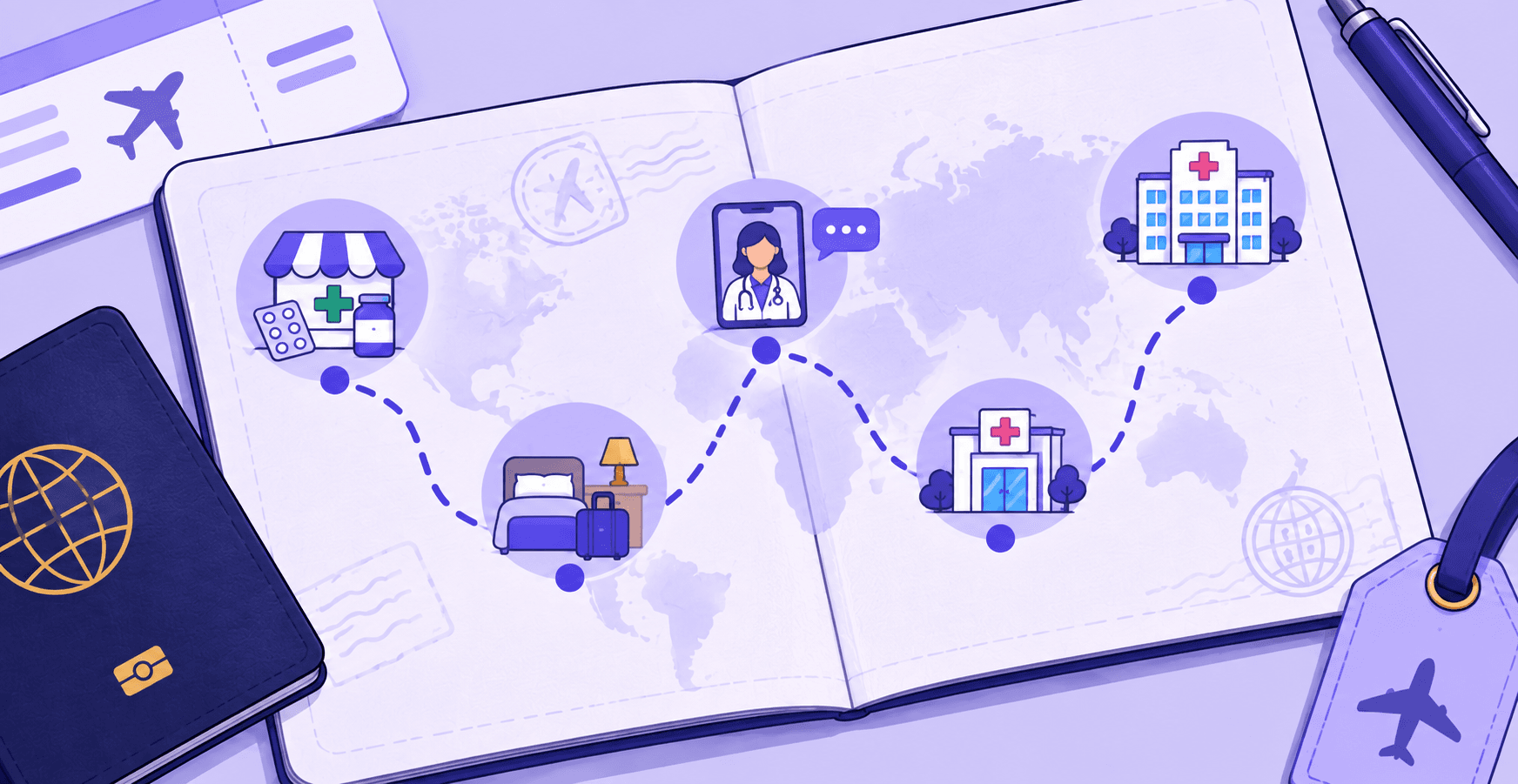 Getting careHow to see a doctor online while you are abroadSeeing a doctor by video is one of five realistic options. What each one costs you in time, and how to pick without losing the afternoon.
 Getting careVideo or in person: which care do you actually need?What each one can and cannot do, the signs that rule video out entirely, and how to prepare for either.