
Getting care
What is a video consultation?
A doctor's appointment that happens over a video call. What to expect, when it helps, and when it is the wrong tool.
The short answer
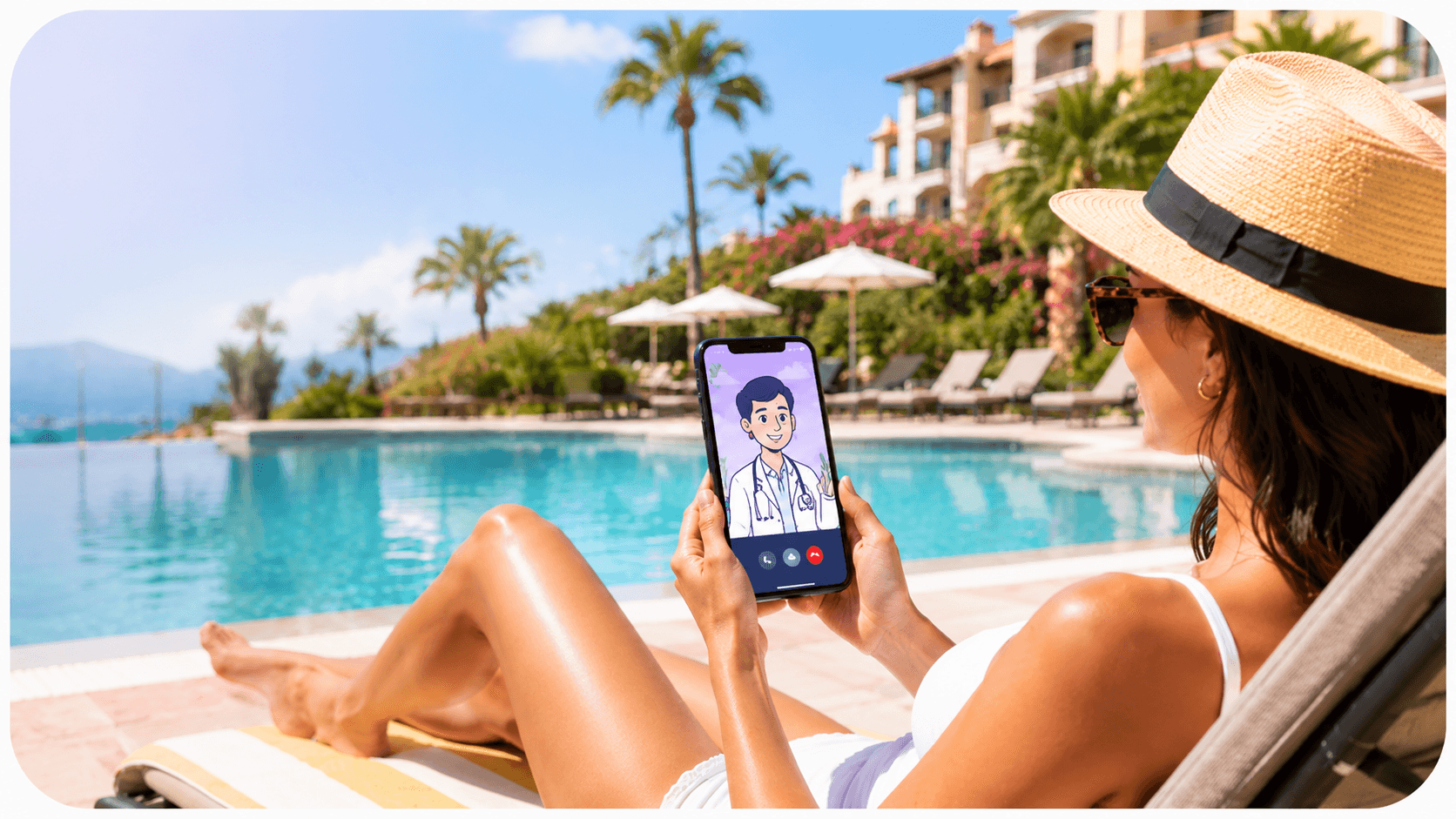
A video consultation is a private medical appointment with a qualified doctor that happens over a video call on your phone, tablet or laptop. It is one kind of online consultation, and a form of telehealth. You describe your symptoms, the doctor asks questions and looks at anything they need to see, and you get medical guidance and a clear next step without travelling to a clinic.
Worth knowing
- A video consultation is a real doctor's appointment that happens over a video call.
- It suits non-emergency problems: colds and sore throats, stomach upsets, rashes and insect bites, allergies, headaches, urinary tract infections.
- Its most useful job is triage. A doctor can tell you whether to rest, visit a pharmacy, or find a clinic.
- It cannot replace a physical examination, and it is never the right route for emergency symptoms.
- Speaking to a doctor in your own language removes the risk of detail getting lost in translation.
In this guide
You wake up to the view you have been dreaming of for months, but something feels off. It might be a scratchy throat, a dizzying headache, or a strange rash that definitely was not there yesterday. Suddenly your biggest worry is not fitting in one last museum; it is how to find a doctor in a country whose healthcare system is a complete mystery.
Feeling unwell abroad is disorienting. The immediate stress is not just the symptom; it is the challenge of navigating an unfamiliar city, finding the right clinic, and worrying about a language barrier.
This is where a video consultation comes in. It is a practical solution that brings medical guidance to you, in your hotel room. This article explains what a video consultation is, how the process works from start to finish, and when it is genuinely useful to an international traveller.
What exactly is a video consultation?
A simple definition
Think of it as a secure, private medical appointment with a qualified doctor that happens over a video call on your phone, tablet or laptop. It is a lot like using FaceTime or WhatsApp to call a friend, except it is built on a confidential platform designed for healthcare.
You can describe your symptoms, ask questions, and get professional medical advice from a licensed doctor, in English, from wherever you have a stable internet connection.
Is a video consultation the same as telehealth?
Not quite: a video consultation is one kind of telehealth. Telehealth is the umbrella term for healthcare delivered at a distance, and the US Department of Health and Human Services lists its forms as talking to a provider by phone or video, exchanging messages, and remote monitoring of health data. A video consultation is the face-to-face version: a live appointment where the doctor can see you as well as hear you.
- Telehealth is the whole category, including phone calls, messages and monitoring devices.
- Telemedicine is often used to mean the same thing. Where people do separate them, telemedicine is the clinical part: a doctor assessing, diagnosing or treating you remotely.
- Online consultation is the plain-English name for an appointment held over the internet, by video or sometimes by chat.
- Video consultation is an online consultation by live video, which is what lets a doctor look at a rash, a red eye or a swollen ankle.
For a traveller the distinction is mostly practical. When a doctor needs to see something, video is the form of telehealth that can do it.
How does a video consultation work for a traveller?
The process is designed to be simple, which matters most when you are not feeling your best. Here is what to expect.
- Book your appointmentYou start on the service's website. You provide a few personal details, briefly describe your symptoms, and are given a way to reach a doctor. It is designed to be done on the go, and it does not need a local phone number or address.
- Prepare for your callA little preparation makes the consultation much more effective. Find a quiet, private spot with good lighting, check that your Wi-Fi or data signal is stable, and be ready to talk about your symptoms, when they started, any allergies and any medication you are taking. Keep photo ID such as your passport nearby, and write down your questions so you do not forget them under pressure.
- Talk to the doctorThe doctor introduces themselves, confirms who you are, and asks you to describe what is going on. They listen, ask follow-up questions about your medical history, and may ask you to use your camera to show them a visible symptom such as a rash or a swollen ankle. The goal is a clear picture of your situation.
- Understand the outcomeThe consultation does not really end when the call does. The value is the clarity about what to do next.
If your call is already booked, our checklist of what to have ready before the call covers ID, medication, connection and the questions worth writing down.
The outcome usually lands in one of four places:
- A self-care plan. Advice on managing your symptoms with rest, fluids and time.
- Reassurance. Sometimes you need a professional to tell you that what you are experiencing is common and not a cause for alarm.
- Pharmacy advice. The doctor may suggest a specific type of medication or product you can find at a local pharmacy.
- A recommendation for in-person care. If your symptoms need a physical examination, the doctor will say so and tell you what kind of facility to look for.
When is a video consultation a good idea while travelling?
A video consultation is a powerful tool when it is used for the right reasons. It is particularly useful to travellers in three situations.
For non-emergency medical guidance
It is an ideal first step for common travel health problems that do not need an emergency room:
- Colds, coughs and sore throats
- Minor stomach upset or traveller's diarrhoea
- Skin rashes and insect bites
- Seasonal allergies
- Headaches, or concerns about jet lag
- Urinary tract infections
- Sexually transmitted infections
When you need to understand your options
Perhaps the biggest benefit is using it as a professional triage tool. Instead of guessing, you can ask a doctor directly: is this serious, do I need to see someone in person, or can I manage this from my hotel? A short conversation can save you an unnecessary and stressful trip to a clinic, or, just as importantly, confirm that you absolutely need to go.
To get past a language barrier
Medicine is built on clear communication. Trying to describe nuanced symptoms, or to understand a doctor's instructions, through a language gap is exactly where crucial details get lost. Speaking with an English-speaking doctor means you can explain what is happening with confidence and be sure you understand the advice you are given.
When a video call is not the right route and you need to be seen locally, a simple way to describe symptoms across a language barrier makes that appointment easier too.
What are the limitations?
To be genuinely useful, a video consultation service has to be honest about what it cannot do. Your safety comes first.
The need for a physical examination
A doctor on a video call can learn a great deal from listening and looking, but they cannot perform a physical examination. They cannot listen to your lungs, feel your abdomen for tenderness, or look inside your ears. If your symptoms suggest a hands-on assessment is needed, the doctor's job is to get you to in-person care safely and quickly.
Prescriptions and technical needs
You need a stable internet connection, and whether a doctor can issue a prescription depends on local regulations. It is not guaranteed anywhere. There is more detail in prescriptions abroad.
Pomodoc: medical guidance for your travels
Understanding the what and the why of video consultations is the first step. The next is knowing that a service exists which is built for your exact situation.
Pomodoc helps travellers connect with English-speaking doctors by video. It is designed for people who are away from home and need clear medical guidance without the stress of navigating a foreign healthcare system. You can see an online doctor in the country you are in, for a fixed price, without finding a clinic first.
For appropriate non-emergency concerns, a video consultation can be a useful first step to understand your options. A doctor can help you make an informed decision about your health, and if your symptoms do need in-person attention, they will tell you. It is about getting you the right care, wherever you are.
In short
If you remember only a few things, make them these.
- A video consultation is a real doctor's appointment that happens over a video call.
- It suits non-emergency problems and getting medical advice while travelling.
- Prepare by finding a quiet space and having your health information ready.
- Always seek immediate local emergency care for serious symptoms.
- Speaking to a doctor in English can give you crucial clarity and peace of mind when you are abroad.
Common questions
What equipment do I need for a video consultation?
A smartphone, tablet or computer with a camera, a microphone and a stable internet connection. Most modern devices have everything you need built in.
Is a video consultation private?
It is a confidential medical appointment, in the same way a visit to a doctor's office is. You are talking to a licensed doctor about your health, and that conversation is between the two of you.
Can I get a prescription from a video consultation while travelling?
It depends on the country you are in and its local rules. In some places a doctor can issue a prescription remotely, and in others it is not permitted. The doctor will advise you on the best course of action, which may be an over-the-counter product or a visit to a local clinic.
What if I am having a medical emergency?
Video consultations are not for medical emergencies. If you have symptoms such as chest pain, difficulty breathing or severe bleeding, go to the nearest emergency department or call local emergency services immediately.
How is this different from searching my symptoms online?
A search gives you generic, impersonal and often alarming information that is not about you. A video consultation gives you personalised advice from a qualified doctor who can ask specific questions about your history and your symptoms, and give you guidance that actually applies.
Sources
- What are different types of telehealth?U.S. Department of Health and Human ServicesThat telehealth includes talking to a provider by phone or video, sending and receiving messages, and using tools to collect and share health data, often called remote patient monitoring.
Keep reading
 Getting careHow to prepare for a video consultation: what to have readyYour technology, your space and your information. A few minutes of preparation is the difference between a good consultation and a frustrating one.
 Getting careVideo or in person: which care do you actually need?What each one can and cannot do, the signs that rule video out entirely, and how to prepare for either.
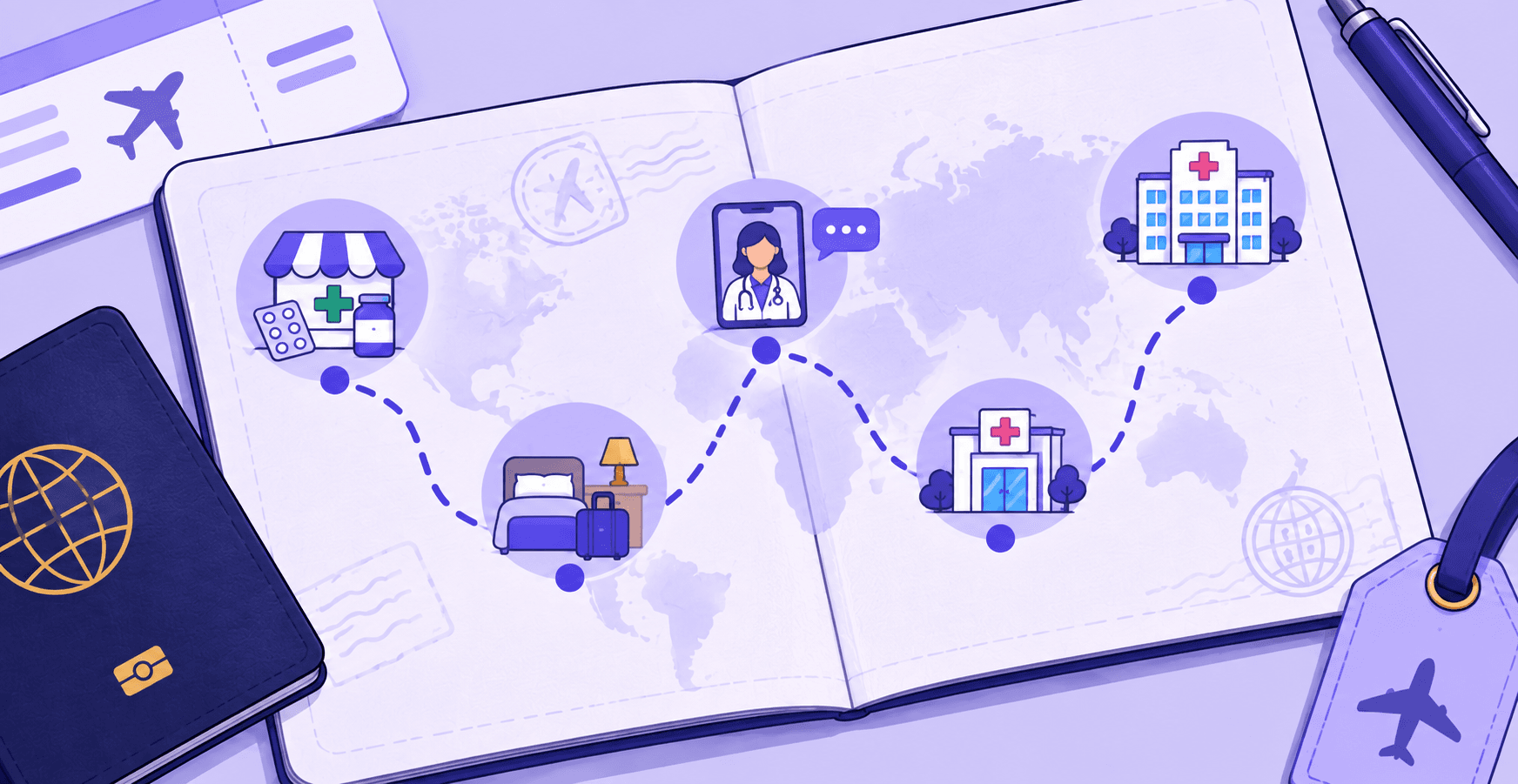 Getting careHow to see a doctor online while you are abroadSeeing a doctor by video is one of five realistic options. What each one costs you in time, and how to pick without losing the afternoon.